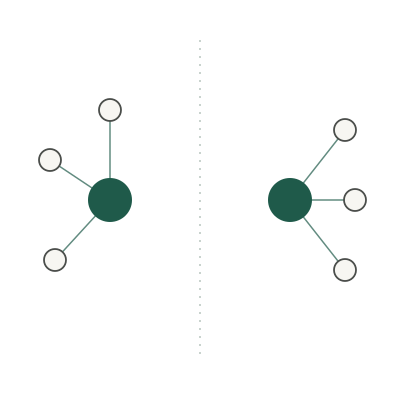
A CTO and a CIO are not two names for the same job, even when the same person can do both. A CTO is accountable for what you build: product, engineering, technical delivery. A CIO is accountable for what you run and protect: systems, data, security and the technology the business depends on every day. Most growing organisations need both functions covered: the real question is whether that means two people, one fractional executive covering both, or something in between.
What a CTO actually owns
A CTO is oriented outward and forward. Their job is building the technology the business sells or relies on to compete: product architecture, engineering standards, technical roadmap, and the decisions about what gets built versus bought. If your organisation ships software, a platform, or a technical product, a CTO is the person accountable for whether that gets built well and built to last. They set the standard for how engineering decisions get made, not just what gets shipped this quarter.
In a growing organisation without a CTO, this work doesn't disappear: it just gets made by whoever is loudest in the room, or deferred until a deadline forces a decision nobody has properly thought through.
What a CIO actually owns
A CIO is oriented inward. Their job is making sure the technology the business runs on actually works: core systems, data, security posture, vendor and licence management, and the governance that keeps risk visible to leadership. A CIO's success is largely invisible when things go right (nothing breaks, nothing leaks, the board isn't blindsided) and highly visible when they go wrong.
In a large enterprise, CTO and CIO are cleanly separate roles with separate teams. In a growing organisation, the line blurs fast, because the same underlying problem (an ageing system, a security gap, a vendor contract nobody reviewed) can look like a CTO issue or a CIO issue depending on which end you're standing at. That's usually the point where organisations realise they've been missing one function entirely while quietly assuming the other one covers it.
A CTO ships the product. A CIO makes sure everything else keeps standing while it ships.
| Dimension | CTO | CIO |
|---|---|---|
| Orientation | Outward and forward, building | Inward, running and protecting |
| Core accountability | Product architecture, engineering standards, technical roadmap | Core systems, data, security posture, governance |
| Typical concerns | Slipping roadmap, unfinished integrations, build vs buy | Unowned cyber risk, drifting software spend, unreviewed vendor contracts |
| When success is visible | The product ships and works | Often invisible, nothing breaks, nothing leaks, the board isn't blindsided |
| Best engagement fit | Technology Strategy & Transformation | Cyber Risk Advisory |
When you need CTO-shaped leadership
Lean toward CTO-shaped leadership when the core problem is building or scaling something technical: a product roadmap that keeps slipping, engineering decisions with no senior technical owner, integrations that never quite get finished, or a build-versus-buy call the business keeps deferring because no one senior enough owns it. This is the shape of leadership behind a Technology Strategy & Transformation engagement: someone accountable for turning a technical direction into something that actually ships.
When you need CIO-shaped leadership
Lean toward CIO-shaped leadership when the core problem is running and protecting what already exists: no one owns cyber risk, software spend keeps drifting upward without anyone quite knowing why, vendor contracts renew themselves unreviewed, or the board is asking questions about resilience that nobody in the room can answer with confidence. This is the ground covered by Cyber Risk Advisory, and by the broader case for treating technology risk as a leadership responsibility rather than an IT afterthought that only gets attention after something goes wrong.
Why most organisations end up with one person covering both
Very few organisations below a certain size actually need two full-time executives and two teams. What they need is someone senior enough to hold both perspectives at once, building where it matters and protecting where it matters, without either function quietly going unmanaged while everyone assumes someone else has it covered. That's the shape a Fractional Technology Executive engagement is built for: one accountable leader, engaged for exactly the days a week the workload calls for, rather than two full salaries sized for a business you might grow into eventually.
If you're not sure which side of the line your organisation is currently missing, a Technology Executive Diagnostic is a low-commitment way to find out before committing to either shape of engagement. Don't start from the title on the business card. Start from the gap: is the risk in what you're building, or in what you're running and protecting? Most growing organisations are missing coverage on one side without realising it, and the fix is rarely two hires. It's one leader with both lenses.
Frequently asked questions
What's the difference between a fractional CTO and a fractional CIO?
A CTO is accountable for what you build: product, engineering and technical delivery. A CIO is accountable for what you run and protect: systems, data, security and the technology the business depends on every day.
Do I need both a fractional CTO and a fractional CIO?
Most growing organisations need both functions covered, but that rarely means two hires. It's often one fractional executive holding both perspectives, engaged for exactly the days a week the workload calls for.
When do I need CTO-shaped leadership rather than CIO-shaped leadership?
Lean toward CTO-shaped leadership when the core problem is building or scaling something technical: a slipping product roadmap, no senior technical owner, or a build-versus-buy call the business keeps deferring.
Can one fractional executive cover both CTO and CIO responsibilities?
Yes. Very few organisations below a certain size need two full-time executives and two teams. What they need is someone senior enough to hold both perspectives at once, building where it matters and protecting where it matters.
Ken Blaszkowski
Ken is an enterprise technology executive with two decades of experience across digital transformation, cyber security, data strategy and AI enablement, including roles as Group CTO and Group CIO. He writes about giving growing organisations the technology leadership they need. Connect on LinkedIn.